Install the app
How to install the app on iOS

Follow along with the video below to see how to install our site as a web app on your home screen.

Note: This feature may not be available in some browsers.

  • Welcome to The Platinum Board! We are a Nebraska Cornhuskers news source and community. Please click "Log In" or "Register" above to gain access to the forums.

Happy Semiquincentennial To Our Country the USA

You will love it!!!!!!!!!!!!!!!!!!!
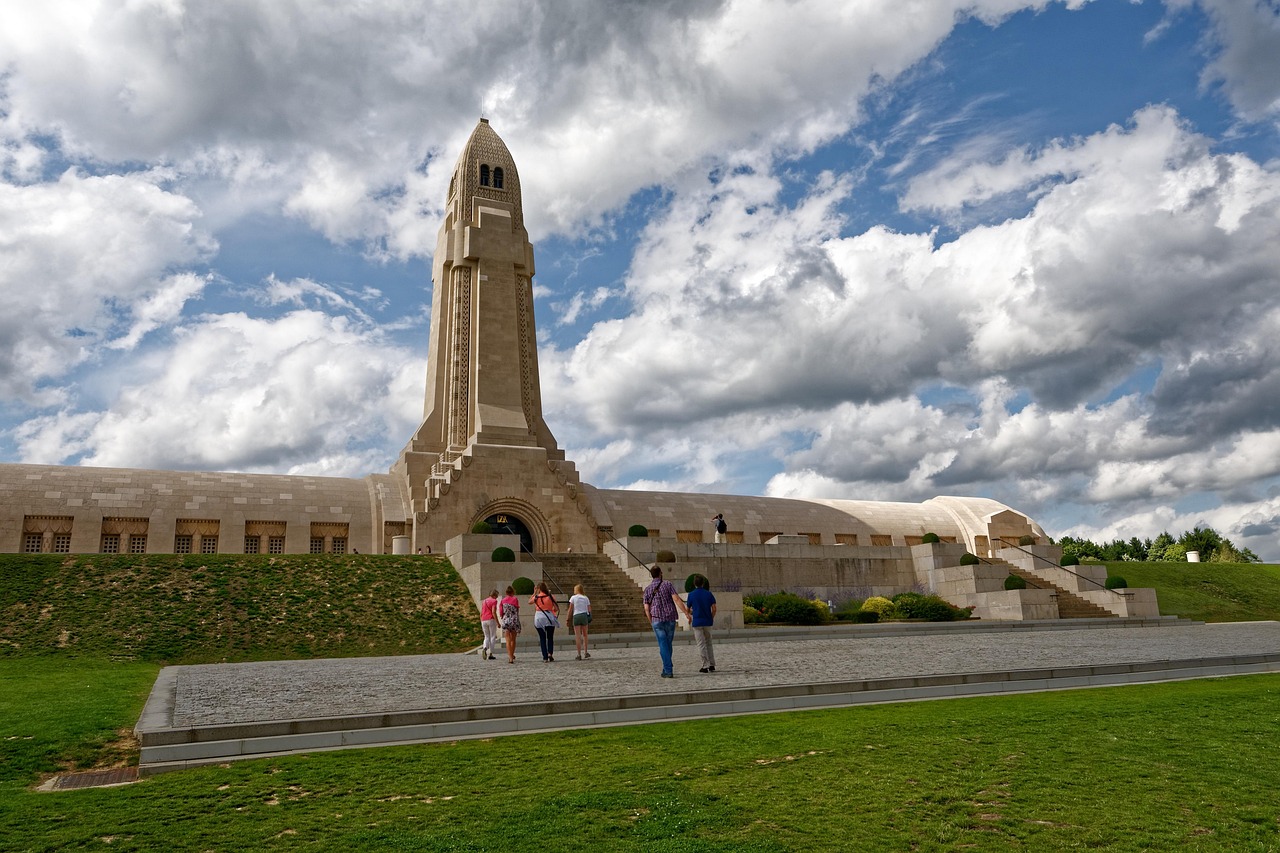
Now let me give you another place to go that you might like, if you are on the Continent; go to Fort Douamount.
fort-3116076_1280.jpg

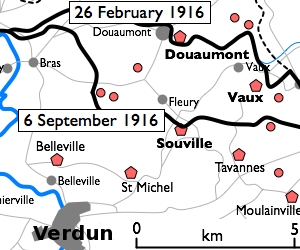
My wife and went their when we were taking classes through University of Maryland European Division and taking a class on the period of World War 1. This is the Verdun region, and within this area over 1 million soldiers died during World War 1.

The building you see in these photos, is an ossuary for literally hundreds of thousands of bodies and their bones. Some could be identified by their units, or from the battle they they died in. Their were however so many bodies, and the battles lasted for so long, that in the end the units, battles, and nation's of origin could no longer even be determined. So around the bottom of this building, which is a mile in it's complete outline, are windows that look into the piles of bones that were found and could not be in any way identified.

They are undoubtedly either French or German/Austrian, but what they are for sure is unknowable.

iu

No location that was historical has had such an impact on me as visiting this location, I was left in tears by it. The unimaginable terror and horror of that battle is just unfathomable.
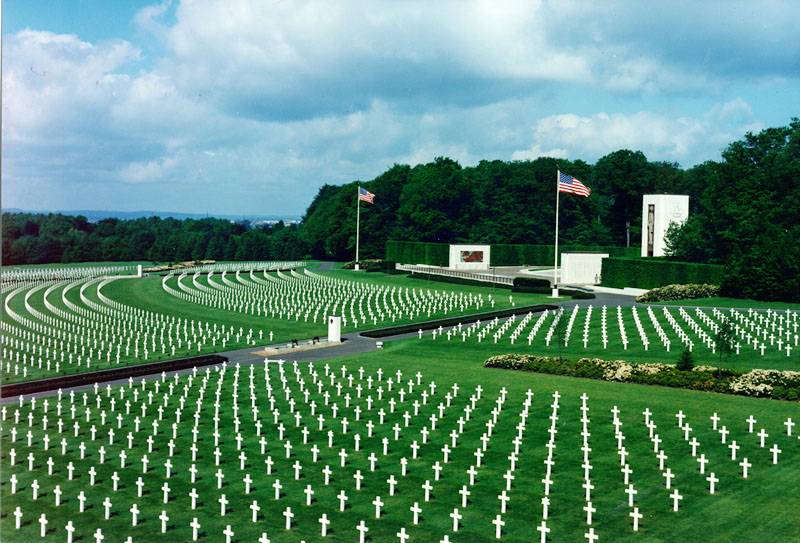
It is a short drive (for Americans) from Fort Douamount to the American Cemetery of WW2 in Luxembourg which I also highly recommend. This cemetery contains the bodies of many Americans who died in the Battle of the Bulge, and as I remember also the Hurtgen Forrest (one of the dumbest attacks by the US in WW2).
Luxembourg_American_Cemetery.jpg
 
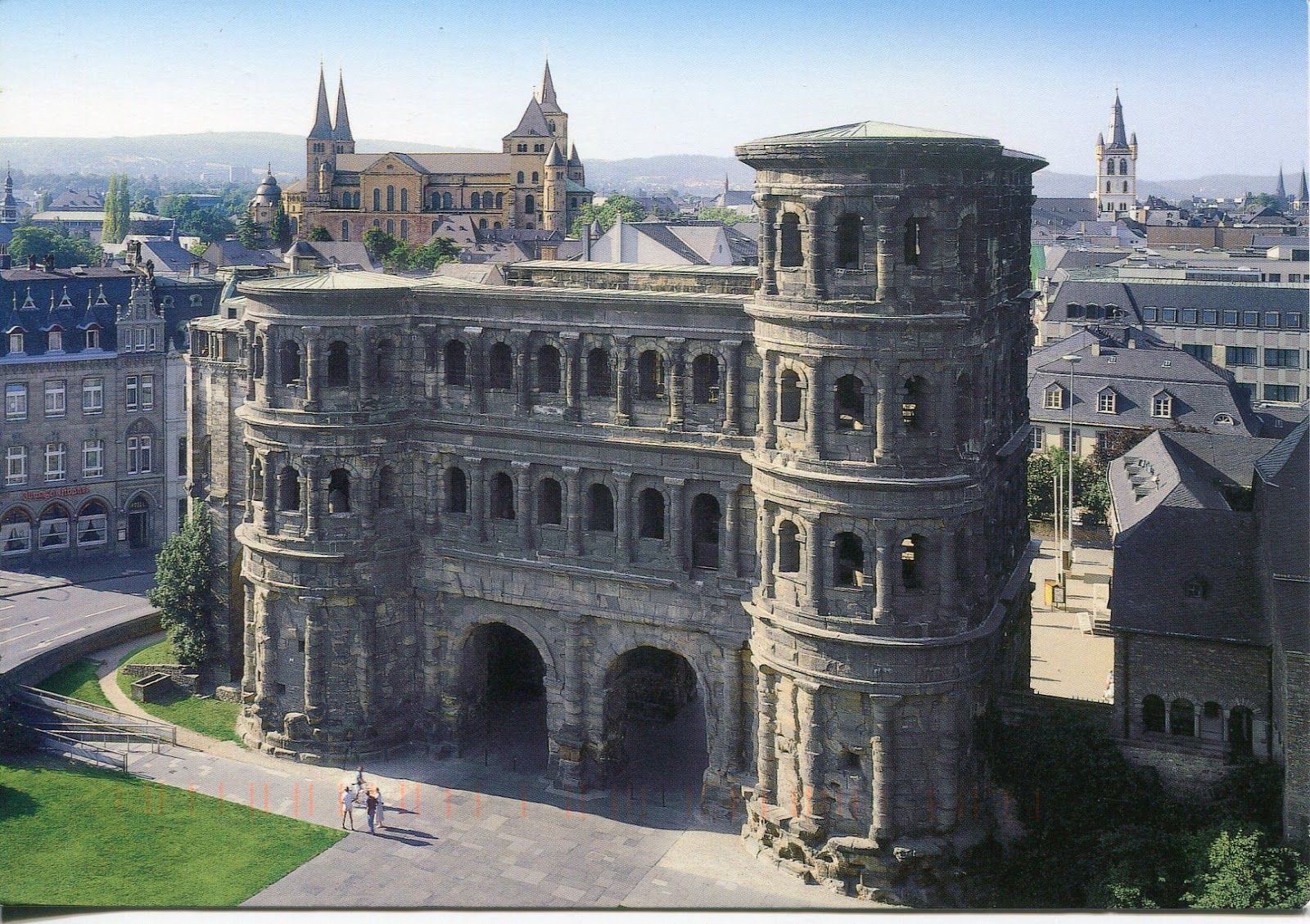
A bit of longer drive from Luxembourg CIty (FYI one of the most beautiful cities in Northern Europe (where I took my present wife on our 1st date)) is the German city of Trier. Trier is the oldest city in Northern Europe, at one point was the Capital of the Rome's Northern and Western Empire. You can still see the Roman gates and walls in downtown Trier. Also you can see the Roman Amphitheater.
d5f313b269a0e2852f617563db3a0987.jpg
 
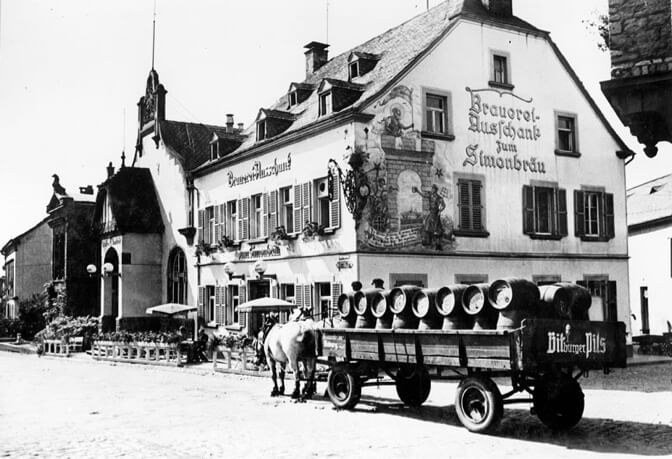
The trip I am supplying you will ultimately take you through the heart of Champagne districts of Northern France, and into the Mosel River wine regions (the best in Germany). From the German perspective; try the Bitburger Pils for absolutely sure!
Bitte Ein Bit!!!

1891-Pferdefuhrwerk_01.jpg
 
So you tell me you are a Civil War student ....... and I ask you whether you have ever driven down to the largest Civil War battlefield West of the Mississippi River??? I mean it is right in the middle of the greater Kansas City, Missouri metroplex, in the area of Westport.

There is even a museum there .....

The story is this:

Essential Facts

  • Also Known As: Gettysburg of the West.
  • Date: October 23, 1864.
  • Location: Westport, Missouri.
  • Opponents: United States of America (USA) and Confederate States of America (CSA).
  • USA Commanders: Samuel Curtis, James G. Blunt, and Alfred Pleasonton.
  • CSA Commanders: Sterling Price, James F. Fagan, John S. Marmaduke, Joseph O. Shelby.
  • Winner: United States of America.
  • Part Of: Price’s Missouri Expedition (August–December, 1864).
  • Era: Civil War (September–December, 1864).

Key Details

  • Because the Battle of Byram’s Ford and the Battle of Westport occurred on consecutive days, over much of the same ground, and involved the same forces, accounts of the two conflicts are often combined.
  • Over 30,000 soldiers took part in the fighting over the two days (22,000 Federals and 8,500 Confederates), making the conflict the largest engagement fought west of the Mississippi during the Civil War.
  • Some historians refer to the Battle of Westport as the “Gettysburg of the West,” because much like the Battle of Gettysburg ended the Army of Northern Virginia’s final invasion of the North in the Eastern Theater, the Union victory at Westport halted the last major Confederate offensive west of the Mississippi River.

History

Confederate General Kirby Smith’s sweeping triumph over Union forces in Arkansas and Louisiana during the Red River Campaign in the spring of 1864 emboldened him to authorize a daring cavalry raid into Missouri in September. Smith chose Major General Sterling Price to lead the foray. Price’s objectives were to divert Union troops away from Richmond and Atlanta, enlist Confederate recruits, capture and destroy Union war materials, and, if possible, capture St. Louis or Jefferson City. Smith also hoped that Confederate successes in Missouri would damage President Abraham Lincoln’s reelection hopes.

Confederate Army of Missouri on the Move

During the summer, Price assembled three divisions of cavalry, mounted infantry, and supporting artillery, commanded by Major General James F. Fagan, Major General John S. Marmaduke, and Brigadier General Joseph O. Shelby. Price’s force, known as the Army of Missouri (CSA), totaled roughly 12,000 ill-provisioned men. Perhaps as many as 4,000 of them were unarmed.

Price’s Expedition began on August 28, 1864, when the Army of Missouri departed Camden, Arkansas. On September 19, he led his men into Missouri near Doniphan and headed north toward St. Louis.

Battle of Fort Davidson — September 26–27, 1864

Eager for a morale-boosting victory early in the campaign, Price decided to attack Fort Davidson, a lightly defended Union garrison, about eighty miles south of St. Louis, on September 26. The two-day battle that followed proved costly for the Confederates. Although the Confederates forced the Union garrison to abandon the fort, Price suffered roughly 1,100 casualties while doing so. More importantly, the delay enabled Union officials to strengthen their defenses around St. Louis, forcing Price to abandon plans to strike his primary objective. Instead, Price led his army west toward Missouri’s capital, Jefferson City, near the center of the state.

For the next week, the Army of Missouri rampaged across central Missouri, destroying railroads, burning bridges, and looting. Bogged down by wagons loaded with supplies and plunder, the slow, undisciplined caravan did not approach the Missouri capital until October 6, 1864. On that date, Price’s vanguard skirmished with federal pickets and forced a crossing of the Osage River six miles below Jefferson City. By that time, Brigadier General Clinton Fisk, commander of the Union District of Northern Missouri, had ringed the city with formidable defenses.

Fearing a repeat of the costly defeat at Fort Davidson, Price decided to bypass Jefferson City. Instead, he headed his army toward the Missouri-Kansas border on October 8. On the same day, Major General Alfred Pleasonton arrived in Jefferson City and took command of all Union-mounted forces. Pleasonton ordered his cavalry into the field to harass Price’s rearguard.

As the Army of Missouri continued its slow trek west, the Confederates assaulted Glasgow and Sedalia on October 15. The Confederates carried off roughly 1,500 muskets, 150 horses, and wagonloads of supplies during the raids.

Union Forces Gather

Price’s raids and pillaging in Missouri came at a steep price. The army’s slow progress enabled Union officials to consolidate their forces.

On October 9, 1864, Major General Samuel Curtis, commander of the Department of Kansas, learned that Price had left Jefferson City headed toward Kansas. Curtis countered by convincing Kansas Governor Thomas Carney to mobilize the state militia.

The next day, October 10, Curtis declared martial law and began merging the 4,000 regular troops under his command with 8,000 Kansas militiamen to form a force to confront Price. Curtis partitioned his army into two divisions.

  1. Major General James G. Blunt, in charge of the District of South Kansas, commanded the army’s 1st Division, which comprised three brigades of volunteer cavalry regiments and a fourth brigade of Kansas state militia units.
  2. Major General George W. Dietzler commanded the 2nd Division, which comprised all the Kansas state militia units except one.
By October 13, Curtis was referring to his combined command as the Army of the Border (USA) in official correspondence.

On October 14, in a memorandum, Curtis informed Major General Henry W. Halleck, who was General-in-Chief of the Armies of the United States, that “I denominate my forces the Army of the Border, and I will do all I can to make it felt by the enemy.”

While Curtis was organizing his Kansas troops, Major General William S. Rosecrans, commander of the Department of Missouri, began rounding up cavalry units under his jurisdiction to stop Price. By early October, Rosecrans had assembled roughly 5,500 Union troopers at Jefferson City, led by Major General Alfred Pleasonton, commander of the District of Central Missouri.

Second Battle of Lexington — October 19, 1864

As the Army of Missouri inched west, Price found himself between two hostile forces. Pleasonton’s cavalry was still nipping at his heels, as roughly 2,000 Federals from Blunt’s division of the Army of the Border headed toward Lexington, Missouri, to await Price’s arrival.

On October 19, the two forces clashed on the eastern outskirts of Lexington. Led by General Shelby’s division, the victorious Confederates forced Blunt’s men to retreat from the Second Battle of Lexington and establish a new line along the Little Blue River.

Battle of Little Blue River — October 21, 1864

Two days later, Price attacked Blunt’s new line in the Battle of Little Blue River and forced the Union forces to fall back to Independence, Missouri, before the fighting ended. Later that evening, Blunt abandoned Independence and joined Curtis’ lines along the Big Blue River, southwest of Independence.

Second Battle of Independence — October 22, 1864

Price’s Army of Missouri occupied Independence on the afternoon of October 21 after Blunt’s Federals fell back to the Big Blue River. The next morning, Price continued his push west towards a showdown with the Union Army of the Border.

Concerns about Major General Alfred Pleasonton’s Union cavalry, still in pursuit of the Confederates, prompted Price to leave James F. Fagan’s division of about 4,500 soldiers at Independence to guard his rear.

Price’s concerns were well-founded. Pleasonton’s Union cavalry caught up with the Confederates along the Little Blue River east of Independence on October 22. After Pleasonton’s troopers forced their way across the Little Blue River and drove Fagan’s men out of Independence, Price had to send John S. Marmaduke’s division back to stem the Union advance. The redeployment, however, dashed Price’s hopes of defeating Curtis’ army in the Second Battle of Independence before being caught in the Union vise.

Battle of Byram’s Ford — October 22, 1864

While the rearguard of the Army of Missouri fought to hold back Major General Alfred Pleasonton’s cavalry during the Battle of Independence on October 22, 1864, Major General Joseph O. Shelby’s division probed Union Major General James G. Blunt’s defensive line along the western banks of the Big Blue River.

With Pleasonton pressing his rear, Major General Sterling Price was desperate to get the bulk of his forces, along with roughly 500 wagons and about 5,000 head of cattle, across the Big Blue River.

After unsuccessfully storming Blunt’s line in the Battle of Byram’s Ford, Shelby began searching for alternatives. By mid-afternoon, Confederate detachments found places to cross the river above and below Byram’s Ford.

With the Federals in jeopardy of being flanked and isolated, Blunt ordered the defenders to withdraw to Westport (now part of Kansas City, Missouri) and join the bulk of Curtis’ army, setting the stage for the decisive Battle of Westport the next day.

Battle of Westport — October 23, 1864

After Blunt fell back from Byram’s Ford, he and Curtis hastily established new lines along Brush Creek, south of Westport. Early on the morning of October 23, Blunt dispatched skirmishers across Brush Creek, where they encountered the advancing Confederate divisions of Major General James M. Fagan and Brigadier General Joseph O. Shelby. The Confederates easily drove the outnumbered Federals back across Brush Creek. The Confederate advance faltered, however, when Shelby’s men ran low on ammunition. When Colonel Charles W. Blair’s Kansas State Militia troops came forward to reinforce Curtis’ line, the battle reached an impasse.

Aided by a local farmer named George Thoman, Curtis discovered a path around the Confederates’ left flank. As the noon hour approached, Curtis attacked the end of the Confederate line at the same time Blunt led a head-on assault, and the Federals began driving their foes back.

Meanwhile, Pleasonton’s cavalry had launched an early morning assault against Price’s rear at Byram’s Ford and forced their way across the Big Blue River. Pleasonton’s arrival left the Confederates caught in a pincer between two surging federal forces. Facing possible annihilation, Shelby executed a masterful delaying action that enabled Price to withdraw his army southward and reconnect with his supply train at Little Santa Fe.

Statistics

United States of America

  • Forces Engaged: Army of the Border.
  • Number of Soldiers: 22,000.
  • Estimated Casualties: 1,500 (killed, wounded, and captured or missing).

Confederate States of America

  • Forces Engaged: Army of Missouri.
  • Number of Soldiers: 8,500.
  • Estimated Casualties: 1,500 (killed, wounded, and captured or missing).
Written by Harry Searles
 
Then I would ask if why you were there you went to the best museum of World Wars I have ever been to:
iu

From a historian's point of view this museum is better than the WW2 museum in New Orleans. Lectures done at the WW1 museum are top notch, some of the best lectures you will ever hear on historical subjects. The partial reason for that is the location relative to the Command and General Staff School at Fort Leavenworth and their high quality staff of historians and strategists.

If you have never been there it is a GOTTO GO place.
 
Have you heard the local radio ad (Omaha) where a boring CPA talks about his services.

I went to YT and couldn't find it. Why don't you just call your marketing company and share it here?
Bob Berger, CPA, the most uninteresting man in the world. Stay profitable my friends.
 
Back
Top